Tooba
|
November 3, 2025
Face Yoga has moved from niche practice to mainstream skincare conversation. Many people turn to it hoping for firmer skin, softer lines, and a more lifted look without invasive treatments. The question is not whether face Yoga replaces professional procedures, but whether it plays a valuable role in a realistic, natural routine.
How Face Yoga Supports the Skin
Face Yoga focuses on gentle muscle engagement, relaxation, and circulation. The movements aim to improve how muscles sit beneath the skin rather than changing facial structure. Over time, this can help soften tension, reduce puffiness, and support a more rested appearance.
The results tend to be subtle. Skin may look smoother, especially around the jaw, cheeks, and forehead. Many people notice a better tone rather than dramatic lifting. According to a 2025 consumer survey, 57% of users who practiced face Yoga for 5–10 minutes daily reported a noticeable improvement in firmness and relaxation after 6 weeks. The value comes from consistency and pairing movement with supportive skincare.
Face Yoga appeals to those who want improvement without injectables or aggressive treatments. It does not involve tools, downtime, or recovery. The practice fits nicely into a routine focused on skin comfort and long-term care. Dermatologist Dr. Emily Tran notes that reducing repetitive facial tension, like jaw clenching, can help prevent deeper expression lines over time.
What Face Yoga Can and Cannot Do
Face Yoga can help with:
Reducing muscle tension that deepens expression lines
Improving circulation for a healthier glow
Supporting facial symmetry through consistent movement
It does not replace collagen loss or dramatically tighten sagging skin. That level of change usually requires clinical treatments or strong active ingredients. Realistic expectations help make face Yoga a supportive, sustainable habit rather than a source of frustration.
How to Start a Simple Face Yoga Routine

A simple routine is more effective than an intense one. Five to ten minutes is enough when done regularly. Consistency is more important than duration.
Before you start:
Clean skin
Apply a light facial oil or serum to prevent tugging (squalane or lightweight oils work well)
Focus areas: Jawline, cheeks, and forehead
Movements: Use slow, controlled motions; end with a gentle massage to calm the skin and encourage circulation
Effective Moves:
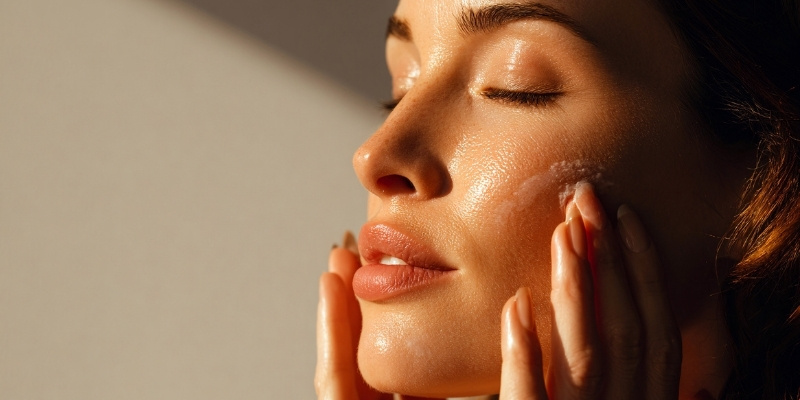
Jaw release: Place your fingertips along the jawline and gently open and close your mouth to relieve tension.
Cheek lift: Smile softly, place fingertips on upper cheeks, hold for a few seconds, then relax.
Forehead smoothing: Glide fingertips along the outer brow, keeping pressure light.
These movements should feel calming, not tiring. A 2025 expert guide suggests repeating each movement 5–10 times per session for optimal circulation benefits.
How Skincare Enhances Face Yoga Results
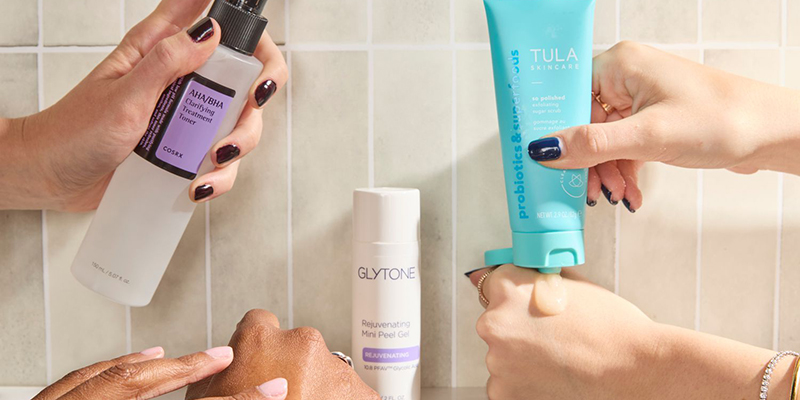
FaceYogaa works best when paired with products that support hydration and elasticity. Dry or irritated skin tends to show lines more clearly. Look for ingredients such as:
Peptides for firmness
Ceramides for barrier support
Antioxidants like vitamin C or green tea
Sunscreen filters for daytime protection
Using skincare before and after facial movement helps the skin respond more evenly and reduces friction-related micro-injury.
Morning vs Evening Face Yoga
Morning: Reduces puffiness and wakes up the skin. Keep movements gentle and short. Follow with sunscreen.
Evening: Supports more profound relaxation and slower movements; pair with richer moisturizers.
Both timings work well; consistency matters more than exact timing.
Layering Skincare Without Irritation
Start with clean skin
Apply light serum or oil to create a slip
Perform movements gently
Finish with a moisturizer suited to your skin type
Avoid potent activities right before face Yoga. Retinoids or exfoliating acids can make skin more sensitive. Apply these later or on alternate nights.

Tips for Gradual Improvement and Avoiding Mistakes
Improved hydration smooths the skin surface.
Relaxed facial muscles reduce tension-based lines.
Consistent sun protection prevents new damage.
Common mistakes:
Using too much pressure can stretch the skin instead of supporting it
Skipping days frequently limits visible change
Combining face Yoga with harsh products may cause irritation
Expecting rapid results leads to frustration
Face Yoga supports these processes but does not replace ingredient-focused treatments.
When Face Yoga Needs Support
If skin laxity or deep lines are a significant concern, topical skincare and movement alone may not achieve desired results. Ingredient-focused treatments such as retinol alternatives or peptide creams can provide additional support. Face Yoga continues to contribute by maintaining circulation and muscle balance and by complementing other interventions.
If skin laxity or deep lines are a significant concern, topical skincare and movement alone may not achieve desired results. Face Yoga primarily improves circulation, muscle tone, and relaxation, but it cannot restore lost collagen or elastin at the depth needed for significant sagging.
Practical ways to enhance results alongside face Yoga:
Retinol alternatives (e.g., bakuchiol or retinaldehyde): Encourage gradual cell turnover and improve texture without the irritation often associated with traditional retinol, making them suitable for daily use, even for dry or sensitive skin.
Peptide-rich creams: Support firmness by signaling collagen and elastin production; when applied before or after face Yoga, they help maximize subtle lifting and improve skin elasticity over time.
Hyaluronic acid or glycerin serums: Hydration plumps the skin, making fine lines less visible and enhancing the smoothing effects of muscle engagement.
Consistent sunscreen use: Prevents further collagen breakdown, ensuring the benefits of both active ingredients and facial exercises are not undone by UV exposure.
Targeted layering: Apply lighter actives first (serums), then richer creams. For example, a morning routine could be: hyaluronic acid serum → peptide cream → sunscreen, while a night routine could pair bakuchiol serum → moisturizer. This ensures actives penetrate effectively without irritating facial movements.
Frequency management: If combining face Yoga with active treatments, alternate nights for stronger actives like retinol or PHAs to avoid over-stressing the skin barrier.
Expert insight: Dermatologists suggest that using supportive actives consistently over 6–12 weeks can make subtle lifting from face Yoga appear more pronounced. The combination of improved muscle tone, hydration, and gentle barrier support can create a cumulative effect that looks natural and sustainable.
Making Face Yoga Work for You
Face Yoga suits those who enjoy mindful, hands-on care and value gradual, natural results. It works best when combined with hydration, sun protection, and gentle actives. For those seeking a subtle, sustainable boost in skin tone and relaxation without irritation, face Yoga offers a practical, low-risk approach.